Showing posts with label microsoft. Show all posts

April 01, 2022

Microsoft Acquires Process Mining Vendor


Microsoft has acquired Minit, a process mining technology vendor based in Slovakia for an undisclosed sum. Microsoft hopes it will help customers to digitally transform their processes and identify which ones are good candidates for automation. Minit allows organisations to analyse, monitor, and optimise their processes by gaining deep insights into how their processes run and discover the causes of operational challenges posed by such processes.

Microsoft claims this acquisition will allow its customers to better understand their process data and drive process standardisation and improvements across a business, ensuring compliance along the way. The big tech company is committing to a software category that could be worth over $11 billion by 2030 after its 2020 acquisition of Softomotive and the launch of new capabilities in Power Automate. Minit’s customers shouldn’t expect a change in the support they are receiving, but it is still unclear whether their team will merge with Microsoft or if the teams will remain separate.
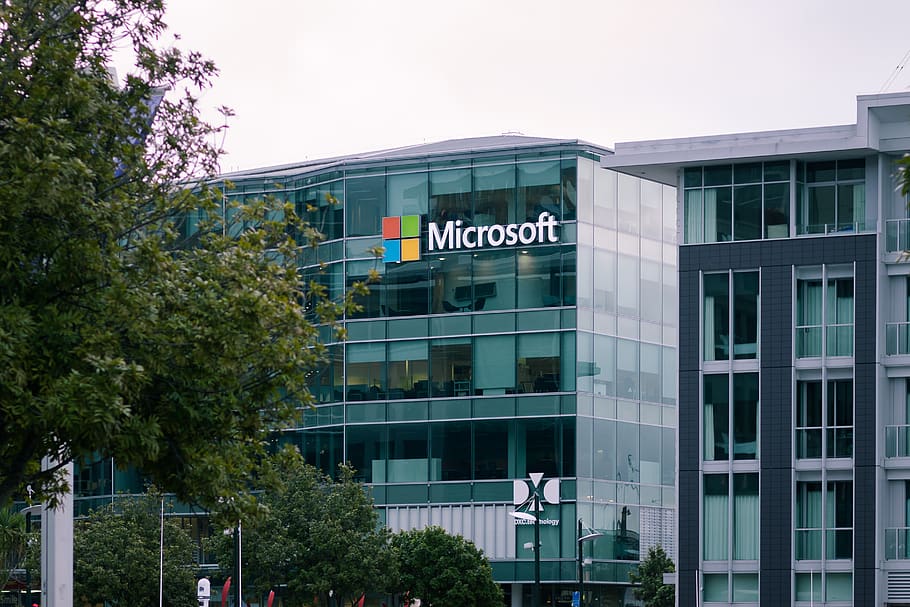
Microsoft Headquarters Building

Process mining is also called task discovery and it involves identifying root causes behind workflow issues and bottlenecks by analysing data from desktop and email apps and other workflows. This is a key technology that facilitates robotic process automation (RPA) which aims to automate repetitive tasks and generate logs to further identify cost savings. This responsibility has traditionally been conducted by system integrators that map out processes after analysing workflows. RPA intends to digitise this process and reduce costs, time, and effort.

Businesses are hungry for more process data as more of them continue their digital transformation and any organisation not providing best-in-class capabilities in process mining may find it hard to offer customers a compelling solution. Process mining seems to be maturing as a market as more acquisitions are starting to be announced in the past year, along with the business process automation industry experiencing general consolidation. Task mining, process mining, and discovery are continuing to be commoditised under other major automation platforms.

March 27, 2022

The LAPSUS$ Group


Microsoft and Okta have this week disclosed breaches involving the data extortion group ‘LAPSUS$’. This group first surfaced in December 2021 when attempting to extort Brazil’s Ministry of Health, but has recently made headlines again after claiming they were behind the NVIDIA, Samsung, and Vodafone hacks. The group announced it was released Microsoft source code, but Microsoft announced it was able to interrupt the group’s download before it could finish and thus limited the broader impact. Apparently, no customer data was involved, and the attack was launched through a single account compromise which granted the group limited access. Microsoft states they do not rely on secret code, and a release or viewing of source code does not lead to elevated organisation risk.

LAPSUS$ mainly gains illicit access to targets through social engineering by tricking or bribing employees or partners of the organisations they’re targeting, including customer support employees. Microsoft refers to the group as “DEV-0537”, and they found the group is bribing willing accomplices to provide their credentials and authentication information or allow the installation of remote management software so the hackers can take control of authenticated systems.

LAPSUS$ Group Hacker Code

The group has its own Telegram channel with over 45,000 subscribers and the hackers actively recruit insiders at large telcos, software companies, hosting firms, and call centres in this channel and through other social media channels such as Reddit. Some employees are being offered up to $20,000 a week. LAPSUS$ claims it is not state-sponsored, but the individuals are clearly highly experienced and have a wide range of technical knowledge.

The attackers have targeted personal accounts, which are typically used for second-factor authentication or password recovery, to gain access to corporate systems or gain additional credentials. In other scenarios, LAPSUS$ has called an organisation’s help desk and convinced personnel to reset a privileged account’s credentials. As many organisations outsource their help desk support, the group is actively exploiting these relationships to help gain access to corporate systems.

The group has also used SIM swapping to access privileged accounts at target companies. The attackers bribe or trick mobile company employees into transferring a phone number to their device so they can then intercept one-time passwords or prompt a password reset via SMS. LAPSUS$ has also searched public repositories for exposed passwords, purchased credentials and session tokens from online forums, and made use of the “Redline” malware to steal passwords.

It appears a member of the group was also involved in the breach on Electronic Arts (EA) last year where 780GB of source code was supposedly held at ransom. This attack was achieved by buying authentication cookies for an EA Slack channel from a marketplace on the dark web.

‘WhiteDoxbin’ is the supposed leader of the group who started out trading zero-day vulnerabilities. Last year they purchased Doxbin, a website that allows personal information of individuals to be posted. Apparently, the new owner was not able to keep the site functioning properly, and has been targeted by the site’s users as a result. Since then, they have sold the forum back to its previous owner for a loss, but not before leaking the whole Doxbin dataset via its Telegram channel. The site’s users again responded by providing a thorough dox of ‘WhiteDoxbin’ – including videos outside a house in the UK and the personal information of family members.

Recent developments include 7 people in the UK being arrested in connection to the hacking group, according to the City of London Police.

March 26, 2022

5G Private Network Trials and Implementations


Despite private 5G services growing fast for enterprise use, IT managers are still learning how these services can help their operations and whether their organisations recognise the technology’s value. Currently, these service providers are targeting companies that use wired Ethernet LANs and Wi-Fi in their enterprise networks. Ethernet can be difficult to install and manage, and Wi-Fi can have coverage issues; 5G aims to solve these issues while also offering very low latency.

The 5G market has been run by just a handful of telecoms giants like Verizon, but tech giants such as AWS, Cisco, and HPE have since entered this market in the last few months which should have IT managers reviewing the offerings of 5G networks – whether it be for shipping and delivery fleets, robotic manufacturing, or tablets in factories and warehouses.

We have even seen telecoms companies partner with big tech, such as AT&T and Microsoft partnering to developing ‘Private AT&T Edge’ which allows users to roam beyond the geographical boundaries of the private network and remain connected through the AT&T public network. Qualcomm is another company partnering with Microsoft, but this time to offer pre-integrated solutions that can simplify enterprise 5G networks.

5G - Fifth Generation Private Networks

Verizon has partnered with Celona to provide 5G solutions for small and medium-sized enterprises too, in an effort to expand the target market. According to the companies, the solution will be usable with the CBRS spectrum. Another name you may not have heard of in this space is ‘Federated Wireless’ and they have so far raised $210 million. They produce spectrum access systems (SAS) that enable enterprises to use shared spectrum in the 3.5GHz band on 5G networks without any interference problems. These spectrum offerings are pivotal as the FCC finished auctioning the CBRS to utility companies, rural telcos, and large universities in August 2020. This spectrum offering expanded the 5G opportunities for private networks and supplied added inventory for carrier, enterprises, and other interested parties.

These private networks aren’t just pipe dreams either, they’re currently being trialled. Betacom launched a managed private 5G service in May of last year. They deploy the network design, deployment, and management of the service, but the customer retains ownership of the network and local control of their data through a NOC hosted on Microsoft Azure. Betacom is now in the early stages of a service trial with Dallas Forth Worth Airport, trialling the network to help higher baggage handling accuracy and efficiency. This ‘5G-as-a-service’ helps the airport with mission-critical applications and reduce baggage costs.

Finance is another industry where 5G is currently being implemented, with Verizon announcing it has taken on BlackRock as its first commercial customer in their new headquarters in NYC. Verizon explains this service offering provides high speeds and low latency for their customer’s trading floor, auditorium, conference centre, and meeting rooms.

As a large influx of investment and funding enters the 5G space, the entrance of big tech companies, and companies already trialling 5G private networks – we are not too far from commercial implementations of 5G as service providers compete for customers and settle on monetisation strategies so companies can determine how 5G can affect their operations. From this year onwards, 5G offerings will continue to grow as this space becomes much more competitive.