Showing posts with label cybercriminal. Show all posts

April 02, 2022

Ransomware is Pressuring Public Services


The FBI and CISA has indicated that ransomware attacks are becoming a safety risk to public services as they are attractive targets to cybercriminals due to their critical nature. Public services such as utility companies, emergency services, safety operations, healthcare and the education sector are being increasingly targeted and sensitive personal data is being stolen which is putting local residents at risk of fraud.

Local governments will see no decline in these attacks as the deployment of malware continues to evolve. The FBI explained a ransomware attack in January of this year forced a US county to take down their computer systems and enact an emergency response through their backup procedures. The county jail was targeted which meant surveillance cameras were deactivated along with the jail’s data collection capabilities, automated doors, and internet access. This obviously caused alarm amongst employees and resulted in significant safety concerns for the facility.

There are plenty of other examples too, including an attack in September 2021 that closed a county courthouse and the attackers subsequently leaked personal details of employees and residents online after the ransom wasn’t paid. And in May 2021, several local governments were infected with a ‘PayOrGrief’ ransomware attack that led to servers and online services becoming inaccessible.

Union County Government Center, North Carolina

According to the report, only academia and higher education facilities were attacked more frequently than local government services in 2021. The FBI has restated several times that victims should not pay any ransom demands because it may encourage further attacks. However, some targets decide to pay so they are able to quickly restore their services.

After paying the ransom though, restoring a network can be a complicated and long task to complete, and there is no certainty that the decryption key provided by the hackers will work or that they won’t return later. The FBI encourages all victims to report any ransomware incident to help prevent future attacks.

They have also recommended numerous cybersecurity measures [PDF] that businesses can enact to help prevent becoming a victim, including keeping software and operating systems up to date with the latest security patches, and requiring strong passwords for online accounts. This makes it harder for criminals to exploit network and system vulnerabilities and guess user passwords.

In addition, organisations should keep offline backups of their data that are regularly tested and updated so networks can be restored without decryption keys. Employees should require the use of multi-factor authentication for their webmail, accounts, and VPNs to add an additional layer of protection against such attacks.

April 01, 2022

Cybercriminals Using War to Phish Victims


Cybersecurity researchers at Google’s Threat Analysis Group (TAG) claim that government-backed hacking groups in Russia, China, North Korea, and Iran, plus various other cybercriminal groups are using the Russia-Ukraine war to phish victims and steal login credentials, sensitive information and money.

One Russian hacking group named ‘Coldriver’ or ‘Calisto’, is targeting US NGOs, think tanks, Eastern European and Balkan militaries, defence contractors, and even NATO through phishing emails sent from fresh Gmail accounts. Another example is ‘Ghostwriter’ a Belarusian group that orchestrates browser-in-the-browser attacks to spoof legitimate websites and domains to steal credentials.

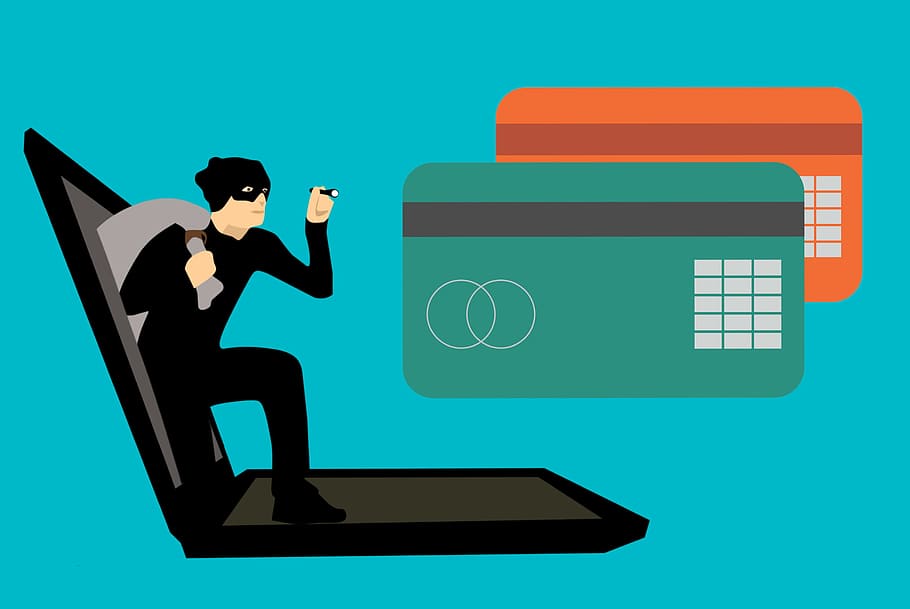
Cybercriminal Hacker Fraud Theft

TAG has also warned about the ‘Curious Gorge’ hacker group which seems to be linked to the cyberwarfare branch of the Chinese military. They seem to be conducting hacking campaigns against military organisations in Kazakhstan, Mongolia, Russia, and Ukraine.

Other non-state sponsored cybercriminal groups are taking advantage of the war by impersonating military personnel and demanding payment for supposedly rescuing Ukrainian relatives. Google’s TAG has committed to continued action in identifying these malicious actors and share all relevant information to governments and industry so that we are aware of these issues and can try to protect our users as best as we can.

March 29, 2022

Ransomware Attacker Gets Prison Sentence


Maksim Berezan, an Estonian national, has received a 5-year prison sentence for being involved in over 13 ransomware attacks costing victims over $53 million in losses. Berezan was part of a Russian cybercriminal forum where tools and services were regularly exchanged. He was arrested in Latvia back in 2020 and later extradited to the US where he pleaded guilty to conspiracy to commit wire fraud and conspiracy to commit access device fraud. It is believed he targeted at least 7 American businesses.

Police found Berezan had cryptocurrency wallets containing $11 million from ransom payments he had demanded during the attacks along with $200,000 in cash. Living a lavish lifestyle, the criminal had bought luxury cars, sport motorbikes, and jewellery, but he has now been court ordered to repay $36 million in restitution. 

US Department of Justice (DoJ)

The US Secret Service states this is a lesson to ransomware criminals that they are not safe and cannot easily hide from law enforcement and cybercriminal investigators no matter where they are in the world. The US DoJ partnered with the Latvian and Estonian police to help obtain the conviction.

The US Attorney for the Eastern District of Virginia stated “Ransomware attacks are devastating to people and organizations alike, and we have honed our strategies and techniques to target both the individual actors who perpetrate these attacks and the networks that support them”.